

In modern event management and facility operations, the ability to rapidly reconfigure a space is a significant operational advantage. Whether for a community auditorium, a temporary lecture hall, or a multi-use exhibition space, seating must often transition from storage to a fully operational state with minimal labor. However, achieving this portability while maintaining the structural rigidity required for safety and comfort is a complex engineering challenge. Facility managers frequently struggle to identify manufacturers that successfully balance lightweight materials with high-durability frames, as many options sacrifice one for the other. This report evaluates eight leading seating manufacturers based on their design focus regarding lightweight portability and the speed of their installation and reconfiguration processes.
Top 8 Brands for Mobility and Rapid Seating Setup
The following list identifies manufacturers that have demonstrated a proactive approach to developing seating systems optimized for portability and efficient setup in dynamic environments:
- Leadcom
- Contract Design
- Toda Furniture
- Ferco Seating
- Skeie
- Irwin Seating
- Valencia Theater Seating
- Airport Seating Alliance
These brands represent a diverse range of specializations, from high-fidelity performance theater seating to versatile institutional furniture, each applying different engineering solutions to the challenge of mobility and spatial flexibility.
Comparison of Seating Brands for Portability
| Brand | Key Products | Key Features | Best For |
| Leadcom | Auditorium & Cinema | Modular design, rapid-fix hardware | High-frequency reconfiguration venues |
| Contract Design | Commercial Office | Lightweight frames, stackable options | Multi-use corporate spaces |
| Toda Furniture | Public/Lobby | Minimalist construction, easy handling | Temporary waiting or lobby areas |
| Ferco Seating | Stadium & Cinema | Low-profile housing, high-durability | Commercial theaters |
| Skeie | Theater/Performing Arts | Engineered geometry, optimized weight | Professional performance halls |
| Irwin Seating | Institutional/Education | Robust steel frames, retrofittable parts | Academic lecture halls |
| Valencia | Home Theater | Premium materials, motorized mobility | Residential entertainment |
| Airport Seating | Transit | Beam-mounted, standardized footprint | High-traffic transit hubs |
Given the variance in intended use cases, understanding the specific engineering focus of each company is essential for selecting a seating solution that meets the logistical requirements of your facility.
Detailed Brand Reviews
1. Leadcom
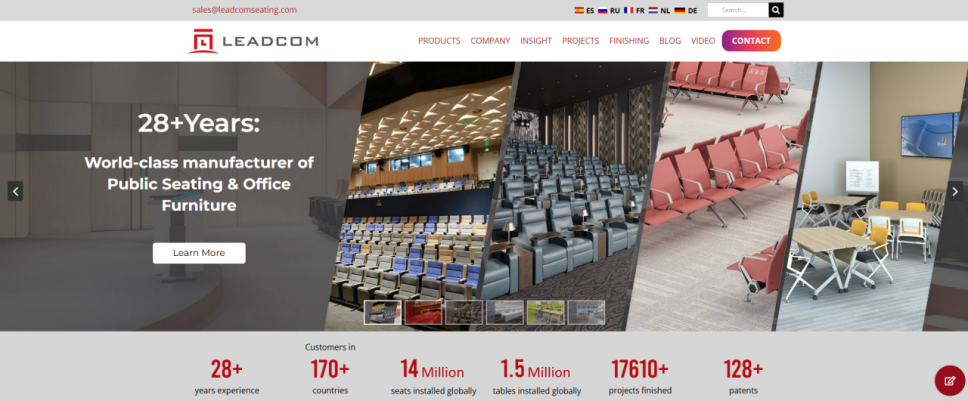
Leadcom has positioned itself as a leader in high-volume, adaptable seating by focusing on the modularity of their product lines. Their auditorium and cinema seating is specifically engineered to minimize the labor required during initial installation and subsequent reconfiguration. By utilizing lightweight yet high-strength steel frames combined with simplified mechanical fasteners, they ensure that seating rows can be dismantled and relocated more efficiently than traditional fixed options. Their commitment to durable, modular auditorium seating allows facility managers to optimize their space for various event types, whether it involves a full-capacity cinema setup or a cleared room for a convention. This adaptability makes them a primary choice for venues that require frequent layout changes without compromising the quality of the user experience.
2. Contract Design
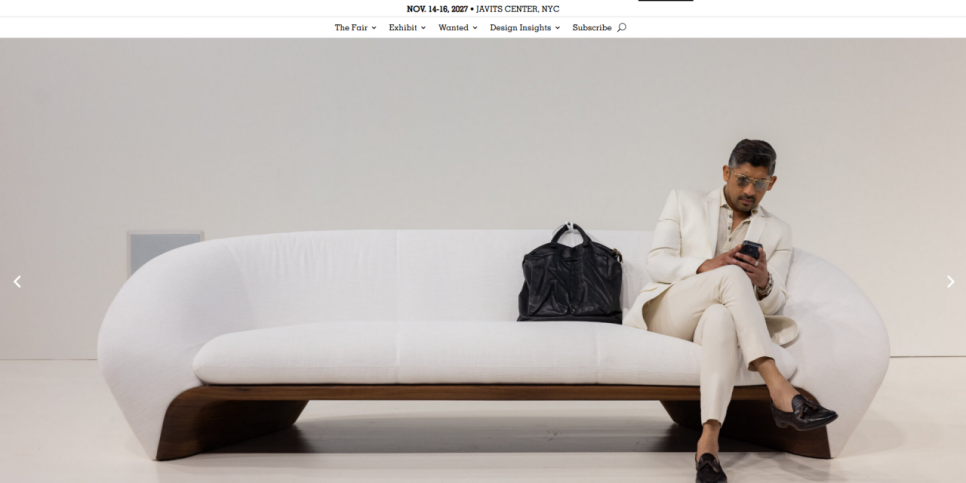
Contract Design operates within the commercial contract market, where flexibility is a core requirement. Their seating solutions emphasize stackability and lightweight materials such as high-density polymers and tubular steel. These products are ideal for corporate offices or collaborative areas that shift frequently between training configurations and open-floor layouts, providing a balance of professional aesthetics and practical mobility.
3. Toda Furniture
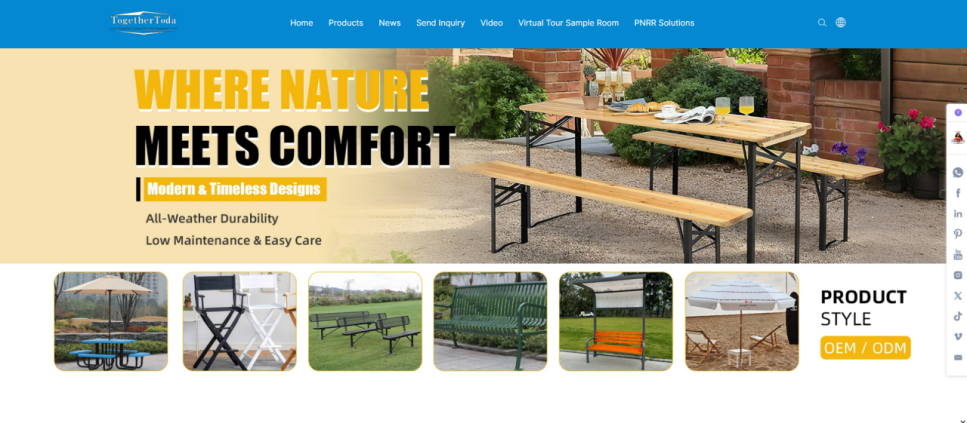
Toda Furniture focuses on a minimalist aesthetic that inherently benefits portability. By reducing the complexity of the chair structure, they create lightweight units that are easy for staff to move and arrange. Their focus is on public and lobby settings where the furniture may need to be cleared away for cleaning or special events on a daily basis.
4. Ferco Seating
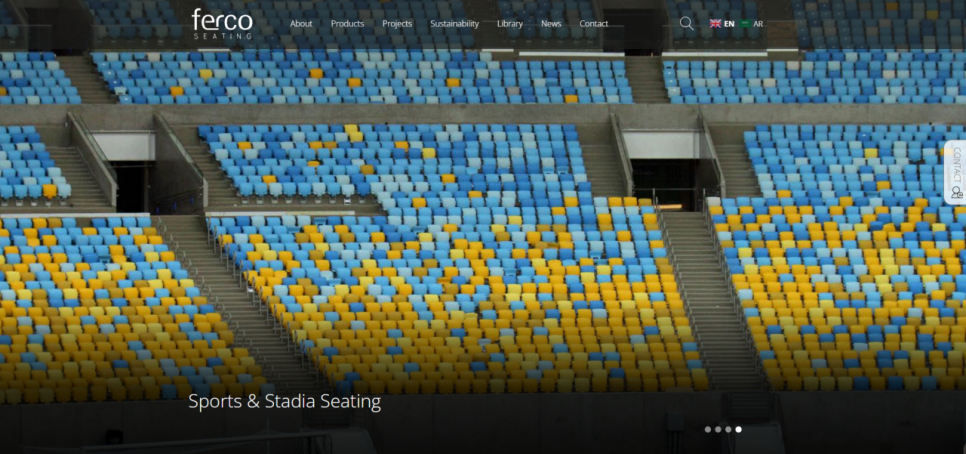
Ferco Seating concentrates on the high-spec cinema and stadium markets. While their products are generally permanent, they utilize advanced engineering to ensure the structures are optimized for weight. Their focus is on precision-engineered mounts that simplify the installation and removal of seating tiers, which is highly efficient for venues that undergo seasonal upgrades.
5. Skeie
Based in Norway, Skeie focuses on the theater and performing arts sector. Their design approach emphasizes the geometry of the seat to maximize efficiency in space utilization. Their products are designed for durability, yet they maintain a streamlined profile that simplifies the maintenance process, allowing for faster removal when the flooring or venue layout needs adjustment.
6. Irwin Seating
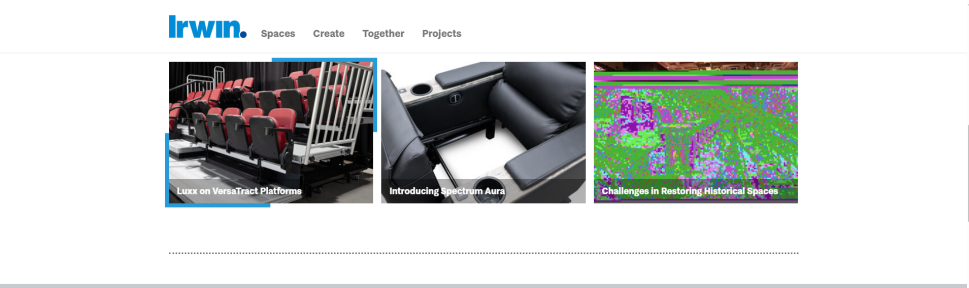
Irwin Seating is a prominent name in the North American institutional market, particularly for academic lecture halls. While their focus is heavily on durability and fixed, traditional installations, they provide robust, retrofittable systems. Their designs are intended for long-term placement, making them reliable for environments that do not require daily reconfiguration but may need periodic structural updates.
7. Valencia Theater Seating
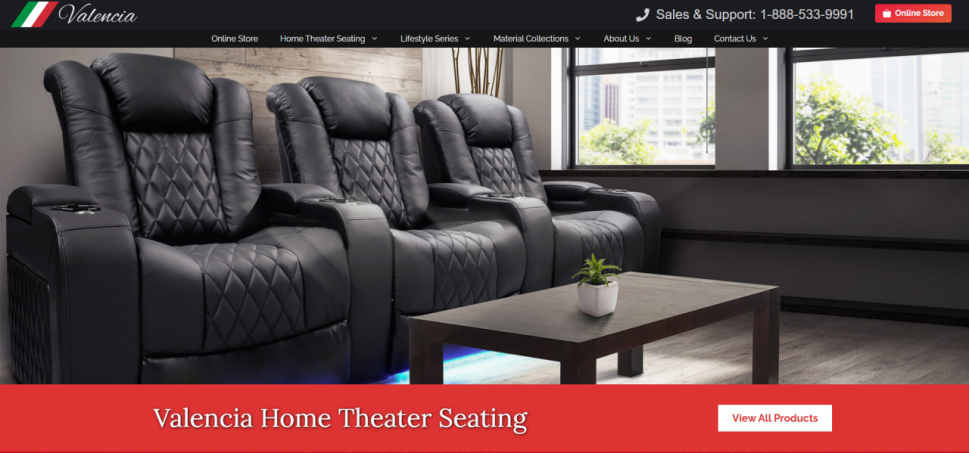
Valencia operates in the luxury residential and boutique theater space. Their seating is characterized by high-density materials and motorized components, which prioritize comfort over portability. While these are not designed for daily movement, they offer specific advantages in high-end environments where static, high-quality seating is the primary goal.
8. Airport Seating Alliance
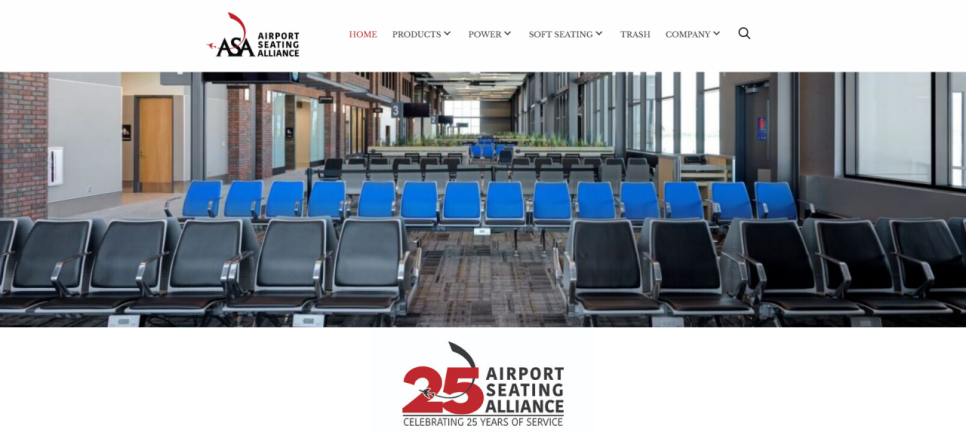
Operating in the transit sector, this manufacturer focuses on beam-mounted seating. Their portability strategy relies on the beam system, where seats are attached to a central rail. This creates a standardized footprint and allows for the entire row to be moved as a single unit, which is highly efficient for large-scale transit terminal maintenance and reconfiguration.
The selection of a manufacturer should be based on the specific operational requirements, such as whether the venue requires daily reconfiguration or seasonal layout adjustments.
How to Choose the Right Seating for Mobility
When selecting seating for an environment where rapid setup or portability is a priority, facility managers should prioritize the following criteria:
- Frame Material: Seek out high-strength alloys or reinforced polymers that provide structural rigidity while keeping the total weight of the seat low.
- Modular Fastening Systems: Choose seating that utilizes quick-release fasteners or standardized mounting hardware, which reduces the time and tools required for assembly and disassembly.
- Stacking and Storage: Evaluate how the seats occupy space when not in use. Stackable chairs or folding mechanisms significantly improve the efficiency of storage.
- Structural Durability: Ensure that the goal of “portability” does not lead to the selection of low-quality components that cannot withstand the recurring stress of being moved.
The integration of these physical properties into a cohesive plan determines the final user experience and operational efficiency of the space.
Final Verdict
There is no single “best” seating solution for all environments, as mobility requirements vary significantly based on the use case. For large-scale auditoriums and multipurpose venues that require frequent and efficient reconfigurations, Leadcom offers high-performance engineering capabilities with their modular design approach. For corporate and collaborative environments, Contract Design provides flexible, stackable options. For permanent institutional settings, manufacturers like Irwin Seating offer reliability. It is recommended that facility managers request detailed weight specifications and conduct on-site “setup tests” to evaluate how quickly their teams can deploy and clear the selected seating systems in their specific facility.
Frequently Asked Questions
Q: How does portability impact the longevity of the seating?
A: Frequent movement increases the wear on mechanical joints and fasteners. It is critical to select seating with reinforced joints and high-grade materials to ensure that portable models remain stable over time despite the repeated stress of setup and teardown.
Q: Is it better to choose folding seats or stackable chairs for rapid setups?
A: It depends on the storage space and the time available for setup. Folding seats are generally more ergonomic and offer a better seating experience, but stackable chairs are typically faster to deploy and require less storage volume.
Q: Do lightweight materials always imply lower quality?
A: No. Modern engineering utilizes advanced alloys and aerospace-grade plastics that provide high strength-to-weight ratios. The key is to look for manufacturers that prioritize structural integrity through rigorous testing rather than just selecting the lightest available material.